


Hardware Ecosystem
Drone Parts
Explore the essential motors, propellers, and batteries that power our nano-drones.
1
Parts Introduction
Parts
This section is dedicated to parts used to build a drone. There are many different configurations which can be used to build a drone. In this section, we look at various parts which are used for nano-drones. There following parts are used in building a nano drone:
2
Motors
Motors

Pluto is a nano-drone which uses primarily coreless brushed dc motors. This section details various specifications of the motors. The following are the brushed motors supported by Primus flight controllers:
- 0615
- 0720
- 8520
- 1020
Dimensions
[Photo with dimensions]
Technical specifications
Parameter | 0720 | 8520 |
RPM@rated voltage (RPM) | 50000 | 50000 |
Rated voltage (V) | 3.7 | 3.7 |
Internal resistance [coil + brush] (Ohm) | 0.6 + 0.2 ~ 0.8 | 0.3 + 0.2 ~ 0.5 |
Diameter (mm) | 7 | 8.5 |
Length (mm) | 20 | 20 |
No-load current (A) | 0.18 | 0.22 |
Stall torque (mN.m) | 3.18 | |
Stall current (A) | 5 | |
Life |
What's inside?
[Photo of exposed coil and brush]
3
Propellers
Propellers

You can use different types of propellers for Pluto.
55mm Standard propeller
66mm Eachine propeller
76mm Tello propeller
4
Battery
Batteries
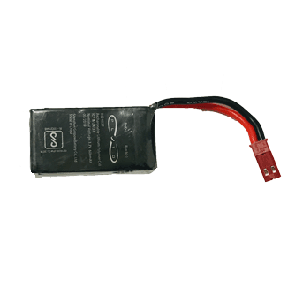
Pluto uses high discharge LiPo batteries. These batteries are manufactured by Grepow exclusively for Pluto. Grepow is one of the leading manufacturer of high-quality LiPo batteries.
Technical specification
Parameter | Pluto 600 | Pluto 800 | Pluto 1200 |
Capacity | 600 mAH | 800 mAH | 1200 mAH |
Nominal voltage | 3.7 V | 3.7 V | 3.7 V |
Max voltage | 4.2 V | 4.2 V | 4.2 V |
Min safe voltage | 3.2 V | 3.2 V | 3.2 V |
Discharge capacity | 25 C | 25 C | 20 C |
Charging capacity | 2 C | 2 C | 2 C |
Internal resistance | < 0.070 Ohm | < 0.070 Ohm | < 0.070 Ohm |
Weight | 16 g | 20 g | 30 g |
Plug | JST-SYP | JST-SYP | JST-SYP |
Charging cycles | 150 | 150 | 150 |
Length | 37 mm | 42 mm | 91 mm |
Width | 24 mm | 24 mm | 31 mm |
Thickness | 8 mm | 9 mm | 6 mm |
Precautions
LiPo batteries can be extremely hazardous if not used properly. Please follow the precautions are given below:
- Don't fly / discharge the batteries when the voltage is low (less than 3.4V). If the battery voltage drops below 3.2V, it will be damaged and cannot be recovered.
- During storage, keep the battery voltage at 3.8V. This increases the shelf life.
- Do not charge the battery above 4.2V. This may lead to fire.
- Do not short the battery. This may lead to fire.
- Do not discharge the battery beyond the recommended values.
- If the battery is swollen up, kindly dispose off the battery properly. Please do not try to puncture the battery, this may lead to fire.